

“What if I don’t actually have OCD?”
“What if I’m wrong?”
“Do I even need a diagnosis?“
Do I need a diagnosis to start OCD therapy?
No, you don’t need to have an obsessive-compulsive disorder (OCD) diagnosis before starting therapy. If you think your symptoms may be related to OCD, you can start by contacting a licensed mental health professional who specializes in OCD. As part of starting care, they can assess your symptoms, talk with you about what you’re experiencing, and determine whether OCD treatment is the right fit.
In other words, you don’t need to arrive with a diagnosis in hand. The assessment is part of getting help—not a prerequisite for it.
At NOCD, our therapists are trained to assess OCD symptoms and develop a personalized treatment plan. If they determine that your symptoms don’t meet the criteria for OCD, they can help you understand what may be going on and recommend appropriate next steps.
Do I need to see my primary care provider before starting OCD therapy?
You don’t need to see a primary care provider before starting OCD therapy—and waiting for that step can sometimes delay effective care. OCD often goes undiagnosed or misdiagnosed for years, especially when symptoms don’t match stereotypes about cleaning, organizing, or checking. Research suggests that it can take up to 17 years for people with OCD to receive a correct diagnosis, and one study found that family physicians misdiagnosed about half of OCD cases.
This doesn’t mean primary care providers can’t be helpful. They are an important part of your overall care, especially if you have questions about medication or other health concerns. But if you’re looking for therapy for OCD, you can contact a licensed mental health professional who specializes in OCD directly.
What if I’m not sure I have OCD?
You don’t have to be certain you have OCD before reaching out for help. Many people seek OCD therapy because they notice patterns that feel intrusive, repetitive, distressing, or hard to stop—but they aren’t sure what those patterns mean yet.
That uncertainty can be especially common with OCD. OCD is sometimes called the “doubting disorder” because it can make people question almost anything, including whether their symptoms are “really” OCD. Some people delay care because they feel like they need to be completely sure before talking to a therapist.
But you don’t have to figure it out on your own. A licensed mental health professional who specializes in OCD can assess your symptoms and help you understand whether ERP therapy—or another kind of care—makes sense.
What if I already have a diagnosis that isn’t OCD?
If you’ve received a different diagnosis but still wonder whether OCD may be involved, it may be worth seeking a reassessment from an OCD specialist.
Having another diagnosis doesn’t necessarily mean OCD is off the table. Some people are misdiagnosed before OCD is recognized, especially when their symptoms look like anxiety, depression, trauma, or another mental health concern. Others have OCD along with another condition, which can make diagnosis more complicated.
Why does OCD-specific treatment matter?
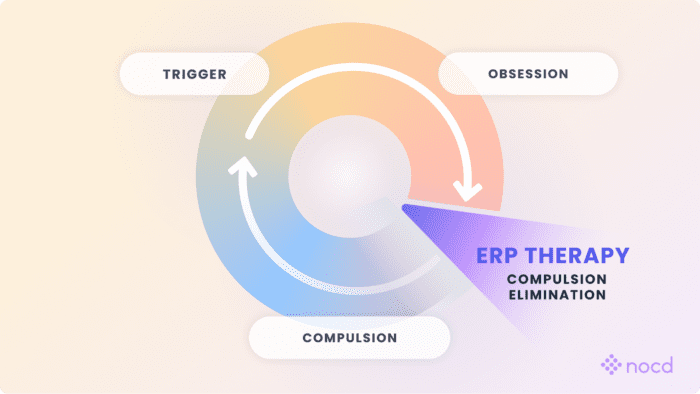
OCD-specific treatment matters because OCD often gets worse when people respond to intrusive thoughts with reassurance, avoidance, checking, or attempts to “figure them out.” In some forms of therapy, these patterns may be mistaken for ordinary anxiety, self-reflection, or problem-solving—but in OCD, they can become compulsions that keep the cycle going.
Exposure and response prevention (ERP) therapy is designed to treat OCD by helping people face intrusive thoughts, fears, and uncertainty without relying on compulsions for relief. That’s why working with someone who understands OCD matters: the right therapist can recognize the OCD cycle and help you respond to symptoms in a way that supports recovery.

Find the right OCD therapist for you
All our therapists are licensed and trained in exposure and response prevention therapy (ERP), the gold standard treatment for OCD.
Bottom line
You don’t need an OCD diagnosis—or complete certainty about what you’re experiencing—before reaching out for help. If your symptoms feel intrusive, repetitive, distressing, or hard to stop, an assessment with an OCD specialist can help you understand whether OCD may be involved.