


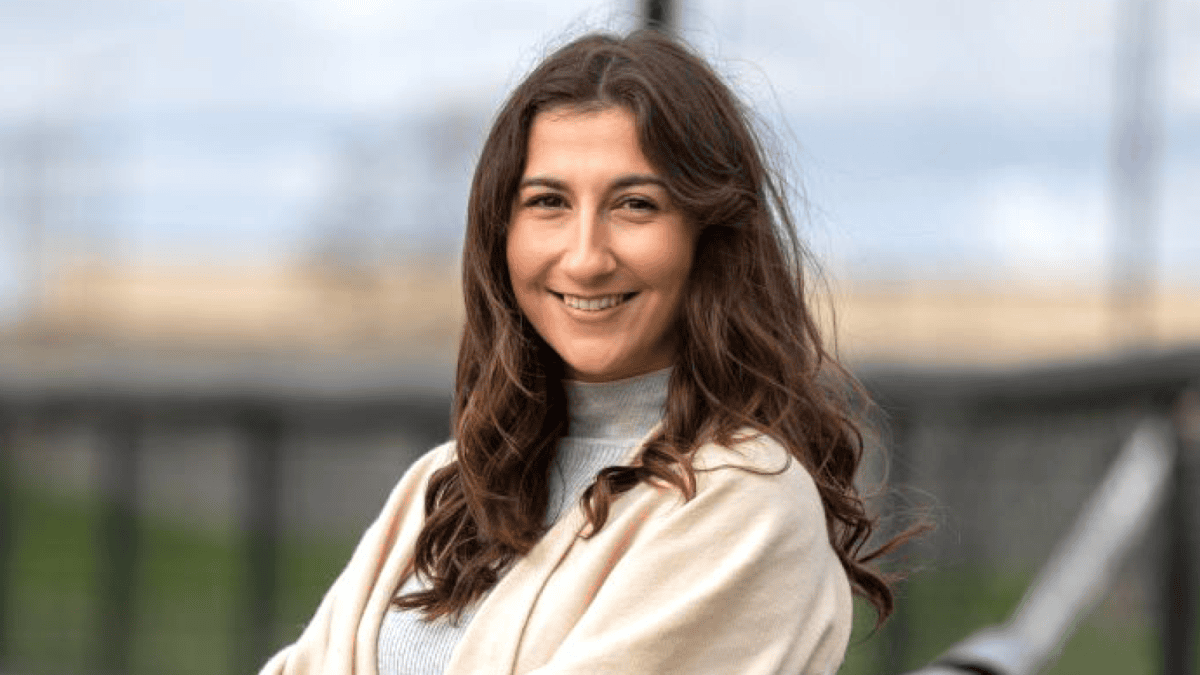
How Sophia Koukoulis, LMHC, found her way to OCD treatment and built a career around continuous growth.
Before joining NOCD, Sophia worked with clients navigating anxiety, depression, grief, and relationship issues, and spent two years working in substance use rehabilitation. It was varied work that she enjoyed and, at the same time, became interested in learning more about OCD.
“I was looking to get into more specialized care,” she says. “I wanted to go into a role where I could learn a lot about [OCD] and give care to people who might not be able to get it because it’s so misunderstood.”
That search led her to NOCD, where she became an OCD specialty care provider.
Finding a place to provide specialized care
Sophia didn’t realize how little her graduate program had covered OCD until she joined NOCD and went through the comprehensive training program. “I probably had clients in the past who had OCD, but I did not know it,” she says.
Training taught her that OCD is far more complex than she’d assumed — it’s not anxiety, and it doesn’t respond to logic the way people might expect. “It’s not as simple as just ‘don’t think about that’ or ‘try to think positive,'” she says. “Those things are not going to work when you’re treating OCD.” Three years in, she says she’s still learning, and discovering new layers in how OCD can show up.
Sophia continues to learn about OCD through consultations and access to experts she can turn to anytime. She’s also received additional training to treat related conditions, like body-focused repetitive behaviors (BFRB).
“I can constantly elevate myself,” she says. “I don’t know where else you can get that.”
The tools and support behind the impact
She’s found that the structure of exposure and response prevention (ERP), sometimes misunderstood as rigid, actually gives her and her Members a clear sense of direction without losing room for rapport. “It’s obviously not rigid — there’s still flexibility within it,” she says. “But the guidance in it is helpful for direction.”
Beyond the clinical model, Sophia credits Noto, NOCD’s proprietary, AI-enabled platform, with keeping her organized day to day with tools like built-in messaging with Members and a clear insights page where she can track her own progress. “I would be nothing without the Noto platform that we use,” she says. “There’s really no question about what you need to be doing or how your day is going to be structured.” That clarity, paired with the depth of her training, allows her to truly focus on working with her Members and doing the work she’s passionate about.
One case in particular stays with her: a Member whose contamination fears had narrowed their diet to just two foods. By the end of treatment, they were eating meals they hadn’t been able to eat in years. “It’s just really amazing to see somebody make so many leaps and bounds.”
Asked to sum up her experience at NOCD in one word, Sophia doesn’t hesitate: passion. “No matter what, even if I’m feeling stressed from work, I can always tap back into that,” she says. “We are truly, truly helping so many people.”
Looking to make an impact like Sophia? Explore therapist opportunities at NOCD.