


A persistent fear of cheating can make it difficult to trust your partner—or yourself—even when there’s little evidence that anything is wrong. When the fear keeps returning and begins shaping how you think or act, it may be connected to past betrayal, insecurity, anxiety, or OCD.
Is it normal to worry about cheating?
Yes. Most people occasionally worry about whether they can trust their partner—or whether they could make a choice that hurts the relationship. Those fears may feel especially intense if you’ve been cheated on, lied to, or blindsided in a previous relationship.
When does worrying about cheating become a problem?
Worrying about cheating may become a problem when it feels difficult to set aside or begins shaping how you act in your relationship. You might repeatedly ask your partner for reassurance, check their phone or social media, replay conversations, monitor your own feelings or attraction, or avoid people and situations that trigger doubt.
These responses may bring temporary relief, but they can also make the fear feel more urgent and harder to let go of. Over time, the worry may interfere with trust, intimacy, concentration, or your ability to enjoy the relationship.
What if I’m right to worry?
Sometimes concerns about cheating are connected to something real. Your partner may have broken an agreement, hidden communication, acted inconsistently, or been unfaithful before. Having anxiety—or even OCD—does not mean you should ignore evidence or assume that every concern is irrational.
The goal is not to prove that cheating could never happen. It is to respond to what is actually happening in your relationship. That may mean having a direct conversation, clarifying your boundaries, deciding what you need from the relationship, or seeking support from a therapist.
At the same time, repeated checking, questioning, reviewing conversations, or seeking reassurance may not resolve the underlying issue or rebuild trust. If the fear keeps taking over even after you’ve responded to what is actually happening, anxiety or OCD may also be shaping your response.
What causes a fear of cheating?
If there’s no clear evidence of infidelity—if your partner is being honest, respecting your agreements, and giving you no concrete reason for concern—why can’t you shake the fear?
Here are some common reasons fears about cheating can happen:
- Past experiences. If you’ve been cheated on, lied to, or blindsided in a previous relationship, your mind may stay alert for signs that it could happen again. Seeing infidelity affect your family or other important relationships can have a similar effect. And if you’ve cheated in the past, guilt or regret may leave you afraid that you’ll repeat the same mistake.
- Stress or major life transitions. Moving in together, getting engaged, having a child, spending time apart, or facing another major change can raise the stakes of a relationship. During stressful periods, fears about betrayal, commitment, or losing control may feel louder—even when nothing is actually wrong.
- Low self-esteem. When you don’t feel secure about your own worth, it can be difficult to believe that your partner will continue choosing you. You may compare yourself to other people, worry that you’ll be replaced, or read ordinary changes in your partner’s mood or behavior as signs that they’re losing interest.
- Attachment insecurity. If past relationships have made closeness or trust feel unsafe, you may become especially alert to signs of rejection, abandonment, or betrayal. Ordinary distance or uncertainty in a relationship can then feel more threatening than it otherwise would.
- Generalized anxiety disorder. Sometimes fears about cheating are part of a much broader pattern of worry. For people with generalized anxiety disorder (GAD), the mind may repeatedly move from one possible threat to another—and relationships can become an especially powerful target because they matter so much.
- Obsessive-compulsive disorder. For some people, fears about cheating are part of obsessive-compulsive disorder (OCD). Intrusive doubts may focus on whether a partner is being unfaithful, whether you secretly want to cheat, or whether an ordinary thought or moment of attraction means you already crossed a line.

Find the right OCD therapist for you
All our therapists are licensed and trained in exposure and response prevention therapy (ERP), the gold standard treatment for OCD.
Could it be Relationship OCD?
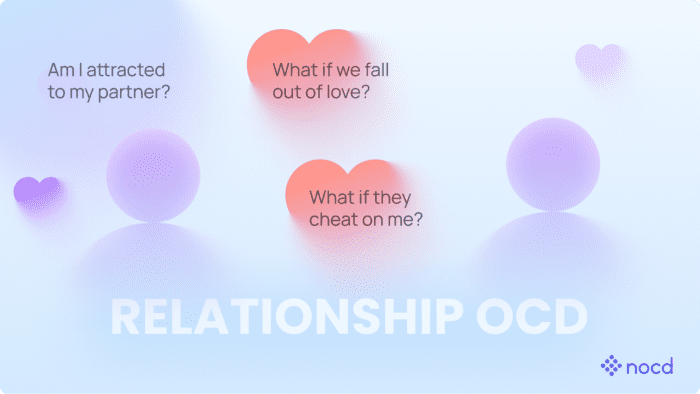
For some people, fears about cheating become persistent, distressing, and difficult to disengage from. This may be a sign of Relationship OCD (ROCD), a subtype of OCD involving recurring doubts about romantic relationships, attraction, love, commitment, or fidelity.
Someone with ROCD may become fixated on questions like:
- “What if my partner is cheating on me?”
- “What if I secretly want to cheat?”
- “What if finding someone attractive means I’ve already crossed a line?”
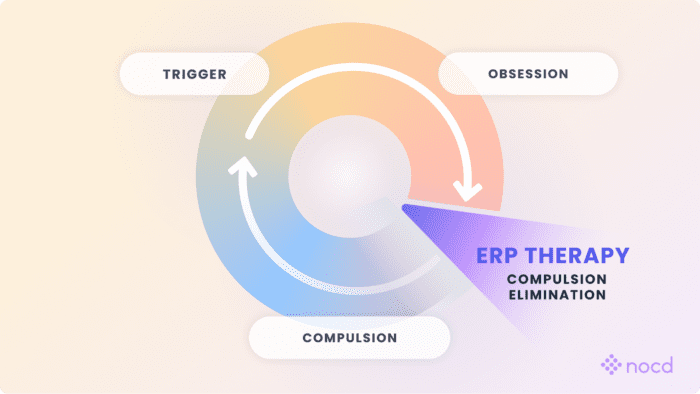
In ROCD, these recurring intrusive doubts function as obsessions. In response, people may feel driven to perform physical or mental compulsions to relieve their anxiety or determine what the thoughts mean.
Common compulsions related to cheating fears include:
- Repeatedly asking a partner for reassurance
- Checking messages, locations, or social media
- Reviewing conversations and past interactions for evidence
- Monitoring feelings or physical reactions around other people
- Confessing thoughts, attractions, dreams, or harmless interactions
- Avoiding people or situations that could trigger doubt
For example, someone might notice that their partner seems distracted while texting and immediately wonder whether they’re talking to someone else. They may replay the interaction, look for changes in their partner’s behavior, check social media, or ask for reassurance. Even if they find nothing, the relief may not last—and another small detail can restart the cycle.
If I look at somebody when they walk by, and I think they’re attractive, does that mean that I’m cheating or about to cheat? You start trying to put things together that don’t make any sense and turn it into a cheating scenario.
Tracie Zinman-Ibrahim, MA, LMFT, CST
How to deal with a fear of cheating?
It’s possible to manage fears of cheating. But the goal can’t be to prove that you or your partner will never cheat. The goal is learning how to respond to the uncertainty that comes with any relationship.
- Stop treating every doubt like an emergency
Why did your partner take so long to reply? Are they hiding something? Does finding someone else attractive mean you might cheat?
These questions can create a false sense of urgency. But you don’t need to investigate every doubt or analyze every moment of attraction.
- Find healthier ways to cope with fear
When fears about cheating come up, notice what you do next. Do you question your partner, ask them for reassurance, check their phone or social media, replay conversations, monitor your attraction to other people, or confess harmless thoughts and interactions?
These responses may bring temporary relief, but the fear often returns. Rather than trying to settle the doubt, give yourself time to feel uncomfortable without acting on it. Unless there is new information that genuinely needs your attention, practice allowing the fear to remain unsettled without investigating it.
- Take care of your mental and physical health
Stress, poor sleep, burnout, and emotional exhaustion can make fears about betrayal or losing control feel louder. Taking care of yourself won’t resolve a real relationship problem, but it can make it easier to respond thoughtfully instead of reacting to every fear.
- Consider therapy if the anxiety is affecting your life or relationship
The right treatment depends on what is driving the fear. Individual therapy may help you address past betrayal, difficulty trusting, low self-esteem, or broader anxiety. Couples therapy may be useful when rebuilding trust, setting boundaries, or improving communication is part of the problem.
When the fear is driven by Relationship OCD, exposure and response prevention (ERP) is the gold-standard treatment for OCD.
Bottom line
A fear of cheating can make it difficult to trust your partner—or yourself—even when there’s no clear reason to believe anything is wrong. Past betrayal, stress, insecurity, anxiety, or OCD can all make that fear harder to shake.
You may not be able to guarantee what will happen in the future, but you can learn to recognize when a concern needs your attention and when fear is taking over. With the right support, it’s possible to communicate more openly, feel more secure in yourself, and respond to what is actually happening in your relationship.