


“Am I a bad person?”
“What if I did something wrong?”
“What if this says something terrible about who I am?”
When OCD attacks your character, even ordinary mistakes, doubts, or unwanted thoughts can start to feel like evidence that something is deeply wrong with you.
What is Moral OCD?
Moral OCD—also known as Scrupulosity OCD—is a subtype of obsessive-compulsive disorder (OCD) that involves intrusive thoughts and compulsive behaviors centered on values, ethics, or personal moral codes. For some, Moral OCD causes recurring fears about sinning, angering God, or otherwise going against their religion’s rules.
But Moral OCD doesn’t always involve religious themes—it can also manifest as general fears about ethics, behavior, responsibility to others, or any question relating to values—like anxiety about veganism or environmentalism.
This form of OCD can make you anxious about how you interact with others, leading to fears that your actions might be offensive, manipulative, or even narcissistic. Ultimately, the core fear for people with Moral OCD is the belief that they might be a bad person, even when there’s no evidence to support it.
Symptoms of Moral OCD
To be diagnosed with Moral OCD, a person must experience obsessions and compulsions related to their ethical moral, or religious codes.
Symptoms can vary widely. Some fear they’ve broken the rules of their belief system, while others worry that they are fundamentally “evil.” The central concern in Moral OCD is often whether you are consistently living up to your faith or morals.
Perfectionism is a common theme, with individuals feeling they’ll never be able to perfectly follow the moral or religious guidelines they value, no matter how hard they try.
Fears about morality can feel all-consuming, as they’re often tied to a person’s sense of self. While everyone with OCD deals with anxiety, those with Moral OCD may experience heightened fears about the consequences of their actions. In some cases, these fears extend to the morality of others, adding to the distress. This can deepen religious anxieties, like whether you’ll be reunited with loved ones in the afterlife.
Dealing with Moral OCD can be incredibly distressing, but remember, you’re not alone. With the right support and treatment, there is hope for breaking free from this cycle.
Common moral obsessions and compulsions
| Obsession | Compulsion |
| “Did I do something wrong?” | Excessive prayer or asking for forgiveness |
| “Did I say something offensive during class/at work?” | Asking partners or others for reassurance that you didn’t do anything wrong. |
| “Have I sinned?” | Excessive confession, both to religious leaders and others. |
| “If I’m a vegan, am I a bad person for accidentally eating honey?“ | Mental compulsions (e.g., self-reassurance or self-punishment). |

Find the right OCD therapist for you
All our therapists are licensed and trained in exposure and response prevention therapy (ERP), the gold standard treatment for OCD.
How is Moral OCD treated?
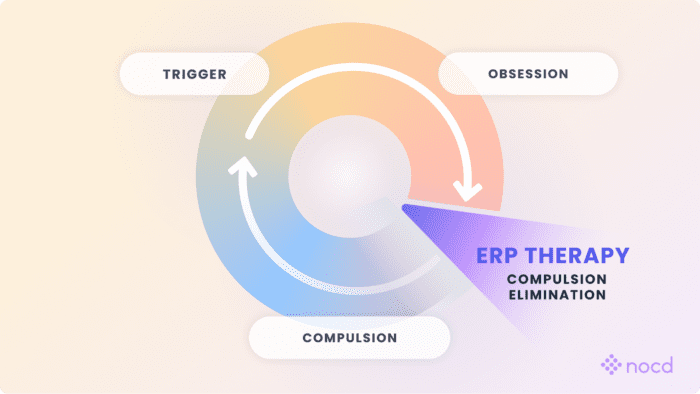
While Moral OCD can be intense and overwhelming, it’s highly treatable. One of the most effective treatments is exposure and response prevention therapy (ERP), an evidence-based approach tailored to all types of OCD.
In ERP, you gradually face situations and thoughts that trigger your fears, starting with small worries and working your way up. As you confront these triggers, you’ll learn how to manage the anxiety without resorting to compulsions.
For Moral OCD, an ERP therapist will help you define your moral code and learn how to live confidently according to your values, rather than being ruled by fear. April Kilduff, MA, LCPC, LMHC, a licensed therapist at NOCD emphasizes, “We won’t ask people to do anything immoral. But…we have to understand the line of what is considered immoral based on your religious or ethical system, versus what OCD is telling you is immoral.” This might mean having a discussion about your religion or ethics, or talking to a religious or spiritual leader, to better understand the lines that can and cannot be crossed.
You’ll also work to tolerate discomfort by engaging in situations that feel unsettling. For example, if your OCD makes you fear being a bad person for making small mistakes, you might start by intentionally being a few minutes late to a social event. Instead of seeking reassurance, you’ll practice sitting with the discomfort of making a mistake. Over time, this helps build resilience so you can face bigger challenges.
ERP can be life-changing, but starting can feel intimidating. Kilduff reminds us, “Thousands, if not millions, of people have done this and gotten better.” Remember, ERP is tailored to your unique experiences, and your therapist will always start with manageable steps. “We’re not going to do the scariest thing you can think of: we’ll meet you where you’re at and help you find a good challenge zone to work in.”
Your OCD may be telling you that you’re a bad person—but that’s not the truth. ERP therapy can help you break free from this cycle and find relief.
Bottom line
Moral OCD can make ordinary mistakes, doubts, or unwanted thoughts feel like proof that something is deeply wrong with you. It can push you to confess, seek reassurance, review your intentions, or punish yourself mentally in an effort to feel certain that you’re still a good person.
But you don’t have to answer every doubt or prove your character every time OCD demands it. With ERP therapy, you can learn to face moral fears without relying on compulsions, so you can live by your actual values—not OCD’s demand for certainty.