



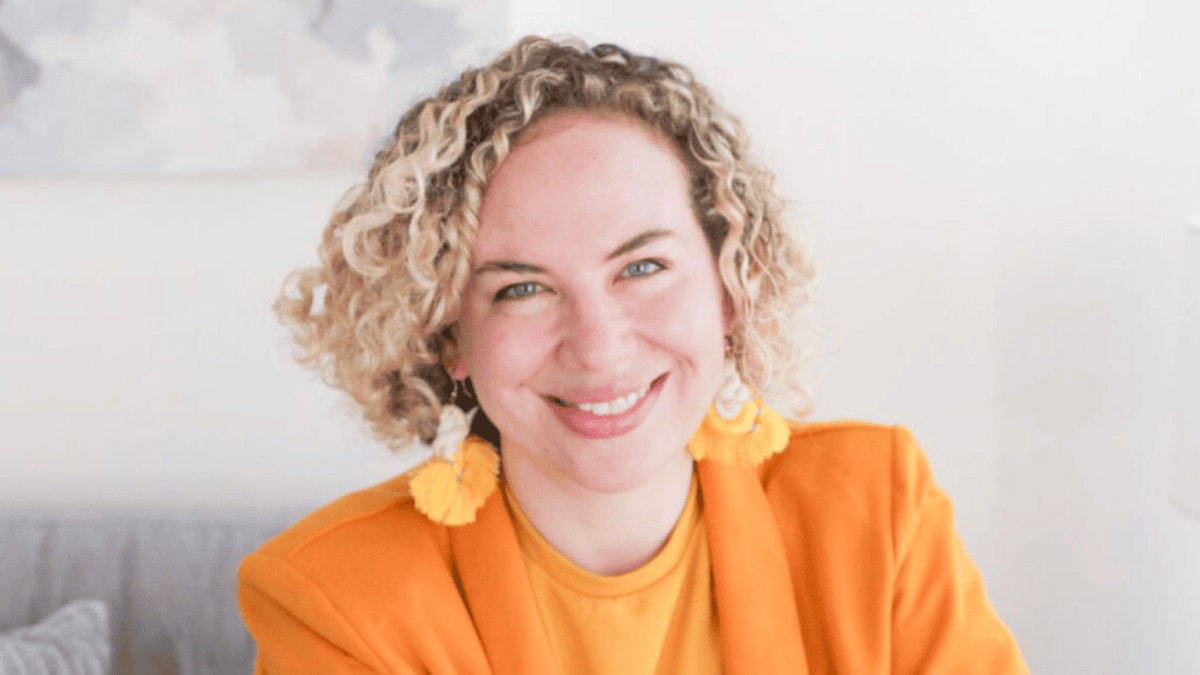
Meet Alessandra Rizzotti, LCSW the therapist who came to NOCD without in-depth OCD training and found the support to become a specialist
When Alessandra Rizzotti finished graduate school, she had experience with cognitive behavioral therapy (CBT) and dialectical behavior therapy (DBT) but didn’t have much training in exposure and response prevention (ERP).
In addition to not learning ERP, Alessandra also remembers spending very little time on obsessive compulsive disorder (OCD) in graduate school. In fact, she remembers OCD getting little more than “a paragraph in the DSM.”
That meant that while Alessandra arrived at NOCD with plenty of experience as a therapist, she had an entirely new specialty to learn. Today, she uses ERP to effectively treat OCD and related conditions, as well as runs a consultation where she supports other therapists.
For someone whose brain, as she puts it, “likes learning,” the opportunity to develop an entirely new speciality was exactly the kind of challenge she was looking for.
The journey to becoming an OCD specialist
When she joined NOCD, Alessandra immersed herself in training and consultations. Having ongoing access to experts and other clinicians was particularly important as she learned how varied OCD can be.
She began recognizing presentations such as harm OCD and taboo themes that she hadn’t previously associated with the disorder — learning how approaches like Acceptance and Commitment Therapy (ACT) and cognitive defusion could complement ERP and help members change their relationship with distressing thoughts.
“ERP, although it seems quite shocking at first, ends up becoming quite creative as a modality,” she says.
A deeper understanding of ERP also changed how Alessandra thought about some of her previous clinical experiences. She could look back and recognize cases she might approach differently with the knowledge she has now.
That’s one reason specialized training has become so meaningful to her.
“I don’t think there are a lot of companies that actually offer that level of rigor, and I think it prepares you for being able to handle different types of cases,” she says. “I’m grateful for it. I wish that more companies did that level of training.”
Learning you don’t have to figure it out alone
Becoming a specialist didn’t mean Alessandra was suddenly expected to have all the answers.
At NOCD, she found consultations focused on different clinical situations and co-occurring conditions, including eating disorders, hoarding, body-focused repetitive behaviors (BFRBs), and tics. When a case becomes complicated, she can bring questions to clinicians with expertise in those areas.
That access matters because OCD doesn’t always present neatly.
“I definitely feel supported in figuring out interventions,” Alessandra says.
For her, effective OCD treatment is ultimately about helping members develop the ability to face difficult experiences rather than trying to eliminate every uncomfortable feeling.
“The work that we’re doing is helping people build distress tolerance so that they can handle really hard situations,” she says. “It’s about building the strength and resilience to get through hard things.”
Technology has also changed the way she practices. Instead of therapy ending when a video session does, Alessandra can communicate with members through NOCD’s app and encourage them to continue practicing ERP in their everyday lives as well as stay connected with them in-between sessions.
The goal, she says, is for members to eventually “become an ERP therapist for yourself.”
Growing into a new role
As Alessandra became more confident in her specialty, she also started thinking about where she wanted to go next.
She now runs a consultation group herself, giving her the opportunity to support fellow therapists and develop skills she hopes to carry into future leadership and supervision roles.
“I think NOCD really cares about helping people feel like they’re growing and changing with the company,” she says.
Running consultations has also given Alessandra another way to connect with fellow therapists– and that connection extends beyond the consultations themselves. Through regular communication, conferences, and opportunities to meet in person, she says she feels like she knows her coworkers better than she did when working at a facility, despite being part of a remote team.
Her perspective on NOCD itself has changed, too. When she first joined, she admits she was skeptical about working for a newer tech company.
“I was hesitant. I will be honest,” she says.
Then she experienced the training, support, and sense of community firsthand.
Her advice for therapists considering the same path is to be willing to lean into the challenge.
“If you’re scared about the training process and how rigorous it is, I encourage you to stick with it because it will help you grow as a therapist,” Alessandra says. “It will push you and make you uncomfortable. And honestly, that’s a good thing.”
Looking to grow your expertise and help others do the same, like Alessandra? Explore therapist opportunities at NOCD.


