



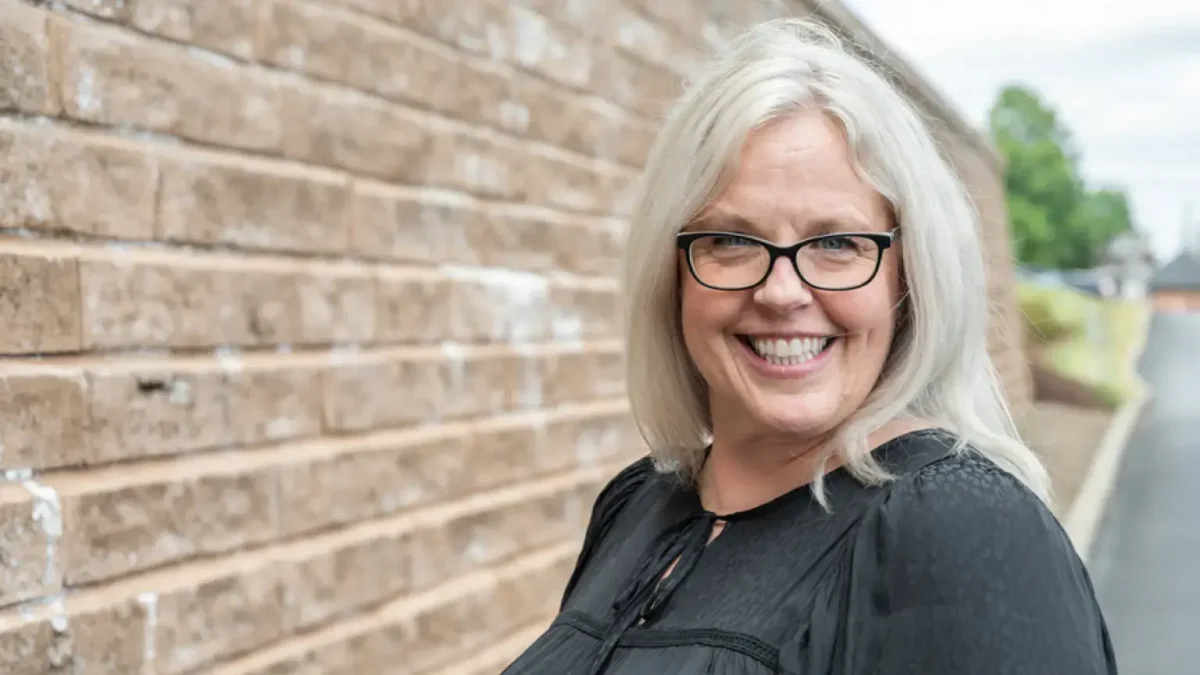
How Cara Michalak, MED, LPC, went from decades in home-based therapy to specializing in OCD, and found a place that consistently helps clients regain their lives from OCD.
For decades, Cara Michalak did home-based therapy, which took her into many different environments. Some days, that meant meeting a client at home. Other days, it meant hiking down a trail to a client’s tent to hold a session. She found the work rewarding because she got to meet people face to face in their homes and fully understand their environment, but it was also “extremely challenging.”
The work was varied, and since she was meeting people where they lived, she never quite knew what to expect. She might arrive planning to do EMDR or cognitive behavioral therapy (CBT), only to find a client without power or food, and she’d shift her focus to making sure their basic needs were met. “You were constantly putting out fires,” she recalls. After decades of home-based work, she decided she needed a change.
As she was thinking about that change, a message arrived. A NOCD recruiter reached out, saying they were impressed by her profile and thought she’d be a good fit for the company. She decided to “bite the bullet” and respond. After four interviews, including meeting with Tracie Ibrahim, NOCD’s Chief Compliance Officer, she was sold.
Learning what OCD really is
Michalak had been a therapist for more than 25 years, but her understanding of OCD was limited. She’s candid about it: she once thought of OCD as “that cleaning disorder,” and was surprised to learn it’s not. She remembers getting only about 15 minutes on it in grad school.
NOCD’s training changed that. She learned about mental compulsions, rumination, reassurance seeking, and avoidance, and how all of it can feed OCD. “It’s the thoroughness of the training that you get to have a full conceptualization of what OCD is and how it really just impacts people’s lives,” she says.
It also made her reflect on past clients she had treated for generalized anxiety disorder with approaches like CBT and dialectical behavior therapy (DBT), without much improvement. She realized some of them may have had OCD. “That light bulb was like ding, ding, ding,” she says, recalling the realization during training.
Making exposure and response prevention (ERP) her own
For someone with a wide clinical background, ERP’s structure still leaves room for creativity. Michalak works individually with each Member to target their core fears, building specific exposures around them. That’s the goal of ERP: it exposes people to situations that provoke their obsessions and the distress that follows, while helping them resist the compulsive responses that bring temporary relief. Response prevention is key, because anything that gets rid of distress makes it impossible to get used to it. When people don’t turn to compulsions, they learn that anxiety passes with time, a process called habituation.
Inside that framework, Michalak puts her past experience to work. When a Member describes contamination fears or harm OCD, she keeps an open mind. “How can we turn this into an exposure?” is the question her mind starts churning on right away. Some exposures are loosely based on situations she’s lived through, which helps her remember what real fear feels like.
Seeing the change
Treating OCD with ERP has allowed Michalak to watch Members change and grow in real time. They often come in hesitant and terrified, and many say they’ve never been able to talk about their thoughts before because of embarrassment or shame. “We’re able to create this environment for them where they feel safe,” she says. “We get the work started immediately, which is what I like.”
Then the progress shows up. For example, in a third session a Member might say they’d never be able to do an exposure, and by the sixth session they’re doing it. Members tell her they can go into their kitchen and cook chicken, do their laundry in a half hour instead of six, and leave their house. “To see that they’re able to feel it themselves, to me, is truly what makes this therapy so effective,” she says.
Assessments help too. She reviews them with Members in detail, and even when a Member doesn’t see or feel their progress yet, she points to what they can do now that they couldn’t two weeks earlier. “That’s progress,” she tells them.
Support she hadn’t had before
Another difference Michalak feels between NOCD and her past roles is the support. As an independently licensed counselor, she was largely on her own. “It was me,” she says. “I think I had supervision once every six months.” At NOCD, she feels supported in a few ways.
The first is having people to turn to. “The ongoing support that we get every day, all day,” she says, from her manager to Slack channels to senior clinical team members she can reach when she’s struggling with something. Everyone is “very genuine,” she says, which “makes it feel more like a family than it does a business.”
The second is consultations, which she regularly attends, “because sometimes I just want to listen to what other people are saying.” And third is ongoing education. “It’s the support and it’s the ongoing education that we receive constantly,” she says. “There’s always something that we can learn.” Since her initial training, she’s added training in body-focused repetitive behaviors (BFRBs) and body dysmorphic disorder (BDD).
“It’s only gotten better in the three years I’ve been here,” she says.
Asked to describe her NOCD experience in a word or phrase, she answers: mind blowing. “Every day I’m just floored about how these people’s lives are drastically changing.”
Looking for a place where you can make an impact? Explore therapist opportunities at NOCD.


