


Have you ever looked at your partner’s texts, DMs, Instagram, or emails?
Maybe you did it just that one time when they were in the shower. Or maybe it’s a regular occurrence.
Perhaps you and your significant other are totally open and share passwords, making it easy to casually scroll through messages or notifications.
But checking your partner’s phone usually doesn’t resolve the doubt that led you there. It can leave you with more questions, more suspicion, and a stronger urge to check again.
Is it okay to look through your partner’s phone?
In a word, “no.”
While everyone has their own reasons for looking at their partner’s phone, it’s usually driven by the urge for information and certainty—without directly asking for it. “I think it’s important to remember that boundaries and privacy are allowable in relationships,” says Kilduff. “When you start checking someone’s phone, you erode the trust and the natural leap of faith you took when entering into the relationship.”
Boundaries refer to the set of guidelines in a relationship that determine what is acceptable and what isn’t. Boundaries are important in all relationships, whether they are romantic or platonic. While some people are comfortable letting their partner check their phone, others may feel that it crosses a boundary and infringes on their personal space and autonomy.
The reality of checking your partner’s phone is that there is always uncertainty about what your partner is doing, and while it might seem like peeking at their phone will give you the info you’re looking for, it rarely stops there. “Checking your partner’s phone feeds the part of your brain that asks those questions,” says NOCD therapist April Kilduff, MA, LCPC, LMHC. In the moment, checking your partner’s phone may provide temporary relief. However, after a while, those same questions may pop up—repeating the cycle. Each time you check their phone, you might find something that sparks new questions or doubts, leading to more snooping.
The checks tend to grow in nature beyond the phone. It’s a pointless and stressful exercise that has no end. There is no number of times you’ll check someone’s phone and decide you trust them completely.
April Kilduff, MA, LCPC, LMHC
What it means if you want to look through your partner’s phone
Although it’s normal to be tempted to look through your partner’s phone, it can also be a sign that your relationship lacks a sense of trust, communication, or security.
- Trust issues: Trust is a key factor in successful romantic relationships, referring to reliability, security, and vulnerability between partners.
- Suspicions of cheating: You owe your partner trust and privacy in a relationship, but that doesn’t mean it always comes easy. It also doesn’t mean that they’re not cheating on you, or that you wouldn’t actually find anything on their phone. In fact, you might have even been in a relationship where the other person did cheat on you. Your suspicions and fears may not actually be overblown—or wrong.
However, while your concerns might be real, it’s crucial to approach the situation thoughtfully and with respect. Instead of automatically resorting to checking their phone, it’s better to have an open, honest conversation about what’s making you feel uneasy.
When the urge to check your partner’s phone is a sign of something more
Sometimes it’s not a problem in the relationship that may be driving you to check your partner’s phone—in fact, they may not have given you any reason to doubt them. There’s a subtype of obsessive-compulsive disorder (OCD) known as relationship OCD (ROCD), that may actually be the driving force behind your behavior.
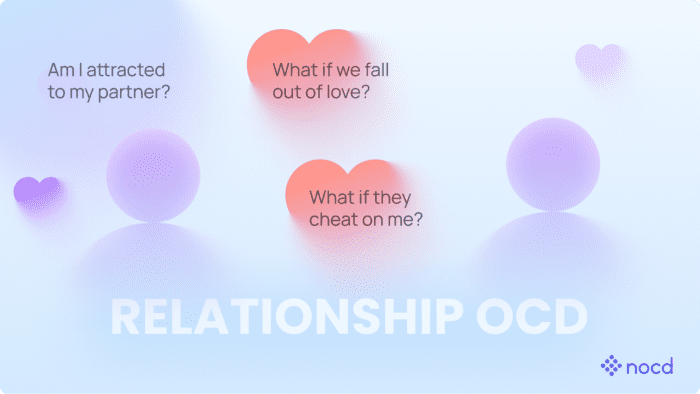
You’ve most likely already heard of obsessive-compulsive disorder (OCD), a mental health condition that is characterized by a cycle of obsessions and compulsions. OCD can appear in your life in an endless number of ways. Relationship OCD (or ROCD) is characterized by the presence of intrusive thoughts, images, sensations and/or urges about your relationship. This might include how you feel about your partner, how your partner feels about you, and questions about if you’re meant for each other or should stay together.
Everyone has doubts about their relationship from time to time. It’s normal to wonder if you’re in the right relationship, and whether you should stay together or end it. But with ROCD, you can’t let these thoughts go, and they become consuming. As a result, you may feel the need to perform compulsions, such as:
- Reassurance seeking: This is where checking a partner’s phone comes in. It’s about looking for confirmation from the outside world that your relationship is ok. While you may turn to family or friends to see if they think your relationship is good, you may also snoop through their phone, too.
- Mental review: This is where you repeatedly replay interactions or conversations in your head, searching for clues that either confirm or deny your suspicions. You might overthink past moments, what you read on your partner’s phone, or what might happen if you don’t look through their phone.
- Social comparison: You might find yourself scrolling through your partner’s social media or looking at what others are posting, wondering how your relationship looks in comparison to others.
OCD will continue to push you, asking you if you are 100% sure that your partner isn’t doing something wrong. And you won’t be able to let that go, which means these thoughts will likely consume you, take up a lot of time, and affect your bond with your partner.
How to treat ROCD
A therapist who specializes in OCD can help you explore whether obsessions and compulsions are the reason you check your partner’s phone. For example, you may also find that you spend a lot of time and energy mentally reviewing your time with your partner or the conversations you’ve had. Did they look at the restaurant server like they thought they were attractive? Have they been talking more about their coworker? These may be other examples of obsessions related to ROCD.
The most effective form of treatment is exposure and response prevention, or ERP, which is used to target all subtypes of OCD. During ERP, you’ll purposely trigger an obsession in order to activate your anxiety around the situation—a process known as exposure. These exposures start with the least difficult instances and slowly work up until you can face the hardest triggers. Then, you’ll make the conscious choice to sit with discomfort until it subsides, instead of performing compulsions—this is the response prevention component of ERP.
OCD is unique, so a therapist will tailor an ERP plan to your needs. Kilduff says that some of the exposures that may involve checking your partner’s phone could be:
- Watching shows or movies that involve cheating.
- Finding stories where someone discovered a partner’s cheating by looking at their phone.
- Writing down the worst-case scenario about how you discovered your partner cheating and what happened.
- Saying things like, “I don’t know what my partner is doing. They could be cheating on me. It’s impossible to know for sure.”
If this all sounds scary, know that you’ll take things step-by-step at a pace that’s bearable, but still challenging. And you’ll go through it with the help of an ERP-trained therapist who will guide you every step of the way.

Find the right OCD therapist for you
All our therapists are licensed and trained in exposure and response prevention therapy (ERP), the gold standard treatment for OCD.
What to do instead of checking your partner’s phone
Instead of invading privacy, it’s also helpful to set clear boundaries about what’s acceptable for both partners. Discuss your comfort levels with privacy and phone access, and respect each other’s need for personal space.
In this case, it’s important to communicate your needs and concerns in your relationship. You can have honest, open conversations with your partner about your feelings of insecurity or fear. Instead of resorting to looking through their phone, try expressing what’s bothering you directly. You may ask direct questions like: “I’ve been feeling a little insecure lately and I’m worried about our relationship. Can we talk about it?”
Instilling trust in your relationship is also important. “Trust is the foundation of any healthy relationship. Trust is built on clear communication and honesty,” says NOCD therapist Tracie Ibrahim, LMFT, CST. “Without trust and clear communication, there is room left for doubt and uncertainty.”
There’s always the risk that you’ll get heart broken in a relationship. Looking through your partner’s phone won’t make them more trustworthy or loyal, or the person you want them to be. “The only way to eliminate all risk of being cheated on is to not be in a relationship. So I urge you to accept the natural uncertainty and take a leap of faith into your relationship with your partner,” says Kilduff.
Bottom line
Checking your partner’s phone might feel like a way to protect yourself from being hurt, but it usually creates doubt instead of lasting reassurance. It can also damage the trust and privacy that healthy relationships need.
If you’re worried about your relationship, direct communication is usually a better place to start than looking for certainty in your partner’s messages. And if the urge to check feels repetitive, distressing, or hard to resist, it may be worth talking to a therapist. When phone-checking is related to ROCD, ERP therapy can help you face relationship fears without relying on checking, reassurance, or other compulsions.